



May 08,2023
What are the more common crushing processes in mineral processing plants?
More common in mineral processing plants are two-stage crushing process and three-stage crushing process. The two-stage crushing process is subdivided into two open-circuit and two closed-circuit. In the latter, the second section of the crusher is closed circuit with the inspection screen, which ensures that the product particle size meets the requirements and does not affect the next step of the grinding operation.

Apr 13,2023
Roll Crusher Performance and Usage
Roll crusher belongs to a kind of high-efficiency crushing equipment, roll crusher since its inception, to help people solve a lot of bottlenecks in the industrial field. Roll crusher after continuous improvement, optimization, upgrading equipment, can help achieve a lot of industrial production in the fine crushing operation requirements.

Mar 15,2023
Classification of commonly used crushing and grinding machinery
According to the mode of action of crushing force can be roughly divided into two main categories of crushing machinery: (1) crushers; (2) mills. Crushers generally deal with larger pieces of material, product size is coarse, usually more than 8 mm. Its structure is characterised by a certain gap between the crushing parts, not in contact with each other. Crusher can be divided into coarse crusher, medium crusher and fine crusher. Generally speaking, the materials handled by the mill are finer, and the product size is fine, up to 0.074 mm, or even finer. Its structure is characterised by crushing parts (or media) in contact with each other, the media used are steel balls, steel rods, gravel or ore blocks. But some machinery is both crushing and grinding, such as $ 5.5 mx 1.8 m grinding mill to deal with the upper limit of the ore size up to 350 ~ 400 mm, the product fineness up to -200 mesh accounted for about 40%. According to the crushing method, mechanical construction features (principle of action) to divide, roughly divided into six categories. (1) Jaw crusher (slot). The crushing action is to rely on the movable jaw plate periodically pressed to the fixed plate, will be sandwiched between the ore crushed. (2) Cone crusher. The ore pieces are between the inner and outer cones, the outer cone is fixed, and the inner cone makes eccentric class action, which crushes or breaks the ore pieces clamped in it. (3) Roll crusher. Ore block in the two opposing rotating rolls in the crevice, mainly by the continuous crushing effect, but also with the abrasive stripping effect, toothed roll surface and splitting effect. (4) Impact crusher. The ore block is crushed by the impact of the fast rotating moving parts. Belong to this category can be divided into: hammer crusher; cage crusher; impact crusher. (5) Mills. The ore is crushed by the impact and grinding action of the grinding media (steel balls, steel rods, gravel or ore pieces) in the rotating cylinder. (6) Other types of crushing and grinding: 1) Roller mill. Borrowing rolling sticks to crush the material. 2) Disc mill. Using the vertical axis or horizontal axis of the disc rotation as a crushing component. 3) Centrifugal mill. Use the centrifugal force generated by the high-speed rotating parts and media to complete the crushing effect.4) Vibrating mill. The use of rotating shaft to produce high-frequency vibration, so that the media and the material to complete the crushing effect of mutual impact. Various types of crushers have different specifications, different scope of use. At present, the coarse crushing in the processing plant mostly uses jaw crusher or gyratory crusher; medium crushing adopts standard cone crusher; fine crushing adopts short head cone crusher.

Mar 08,2023
What are the advantages of laser cladding over other cladding technologies?
Following the development of mechanised industry, and other cladding skills (such as spraying tungsten carbide, tungsten carbide spraying plasma spraying or arc welding) compared to laser cladding is a unique process, the use of which there are fundamental differences. With laser cladding, a highly concentrated heat source has a significant impact on the product. Because of its low heat input, high cure rate and accurate process control, laser cladding has many advantages.

Nov 17,2022
Laser Applications in Silicon Carbide Semiconductor Wafer Processing
Silicon carbide is a high-performance third-generation semiconductor material with good optical properties, chemical inertness and excellent physical properties, including wide bandgap, high breakdown voltage, high thermal conductivity and high-temperature resistance, often used as a new generation of high-frequency, high-power device substrate materials, widely used in high-end manufacturing areas

Oct 13,2022
Completed the validation and delivery of laser cladding process for oil drill pipe products.
The use of arc welding on the card brazing sleeve wear-resistant treatment, but this process in the welding process, often cracks, pores, spatter, bad shaping and other problems, seriously affecting the quality of the workpiece wear-resistant belt and welding results

Jul 11,2022
Belt sintering machine trolley arching phenomenon appeared reasons and the harm produced
When the trolley enters the tail section of the sintering machine, it will start to enter the swing level through the centre of the star wheel, and in the process of catching up with the forefront trolley, due to the force of the star wheel's tooth plate the trolley will be pushed forward, and the trolley's rear wheel ferrule will be in contact with the front working surface of the tooth plate.
Nov 21,2019
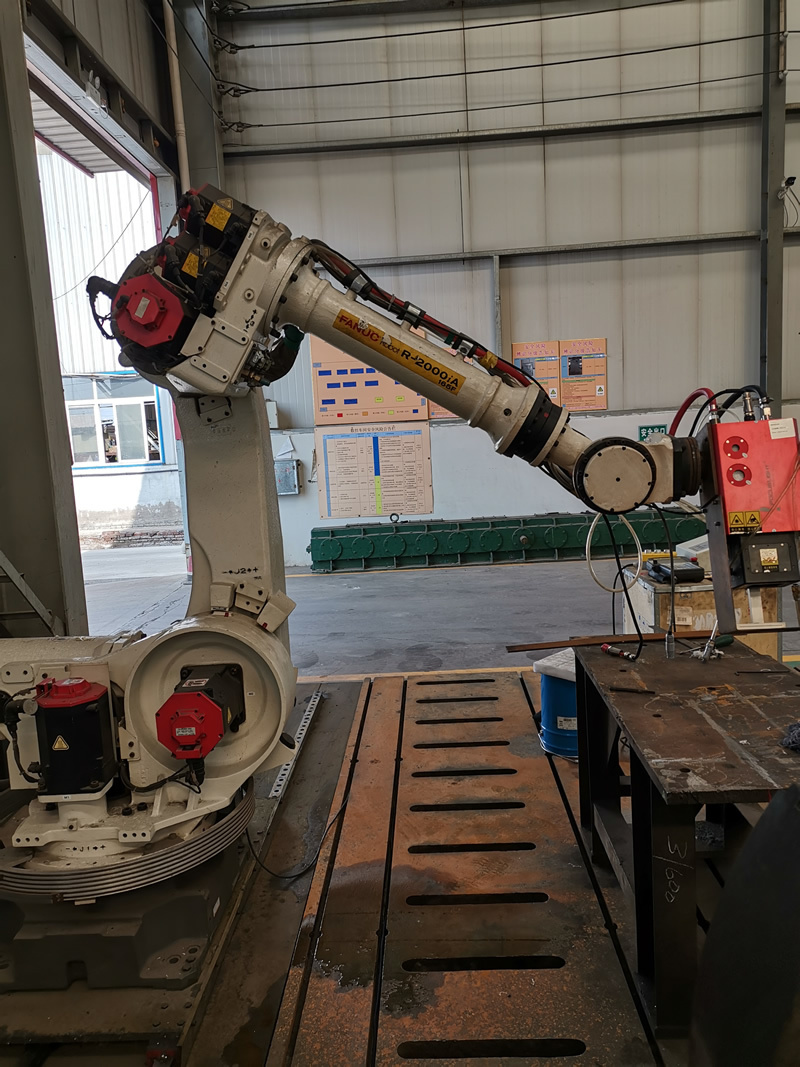
Laser cladding refers to the different ways to add materials on the surface of the substrate to be cladding placed on the selected coating material by laser irradiation and the substrate surface of a thin layer of simultaneous melting, and rapid solidification to form a low dilution, and the substrate into a metallurgical combination of surface coatings, to improve the grass-roots surface of the abrasion-resistant, corrosion-resistant, heat-resistant, oxidation-resistant, and electrical characteristics of the process, so as to achieve the purpose of the surface modification or restoration, which meets the specific performance requirements of the material surface and save a large number of precious elements. It not only meets the requirements of specific properties of material surface, but also saves a lot of precious elements.
Sep 23,2019
Laser cladding wear resistance test
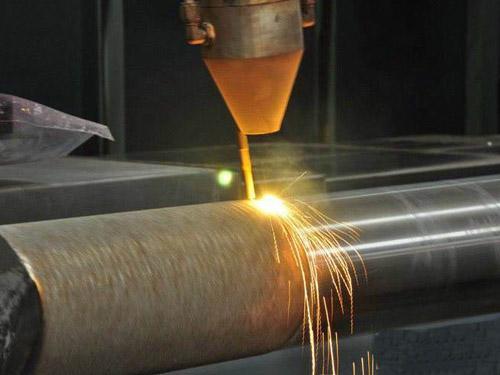
Laser cladding is the process of fusing or semi-molten powder on top of a molten bath by changing the interaction between the laser and the powder, and feeding a stream of molten or semi-molten liquid into the bath to achieve improved cladding efficiency and surface quality, and to form a metallurgically bonded surface coating. The surface of the finished coating can be quickly laser scanned to improve the surface quality again. High-speed laser cladding process can improve the wear resistance, corrosion resistance, heat resistance and other properties of the surface of the workpiece, especially the improvement of wear resistance is one of the more important indicators. For the fusion cladding wear resistance test there are mainly the following methods: 1 weightlessness method, that is, friction wear test wear before and after the weight difference to measure the wear resistance, the smaller the weight difference is the better the wear resistance, and vice versa was established. Measurement requires the use of high-precision weighing scales. In the test, the coefficient of friction is measured by reading the friction torque directly from the testing machine and recording the movement trajectory with a recorder, and then calculating the coefficient of friction using the measured friction torque.2 Dimensional Change Measurement Measurement Measurement of the amount of change in size of the wear area by using a spiral micrometer or a micrometer caliper, e.g., if the workpiece is a cylinder, measure the amount of change in the diameter of the wear area.3 Surface Topography Measurement Measurement Method Using a Palpation Type Surface Topography Measurement Method Surface Profile Measurement Method utilizes a tactile surface profilometer (profilometer or step meter) to measure the change in surface roughness before and after wear.

Jul 12,2019
Tangshan Fangtong Metallurgical Equipment Manufacturing Co.
Tangshan Fangtong Metallurgical Equipment Manufacturing Co., Ltd. was founded in 2006 with a registered capital of 10 million RMB. The company mainly focuses on the production of metallurgical equipment. Adhering to the development concept of integrity management and customer first, technology first development strategy, the company has been quite large. At present, the company has two factories covering an area of 50 acres, with more than 70 employees and an annual output value of 30 million RMB. At present, the company has a variety of high-end equipment such as laser cladding, CNC lathe, lathe, boring machine, etc. The products include laser cladding, machining, production of metallurgical equipment and riveting and welding processing and other types.
Contact Us
E-mail :
gengkewei@tsfangtong.cn
Phone/WhatsApp:
+86-18232670405
Address:Longfengzhuang Village, Dadi Town, Fengnan District, Tangshan City, China

Address: Longfengzhuang Village, Dadi Town, Fengnan District, Tangshan City, China
TEL:0315-8321333 / 18332679268
E-mail:gengkewei@tsfangtong.cn
Website:www.tsfangtong.cn


Get a quote